EV Electrician Career Decision Sprint
COURSE SUMMARY
If you are interested in helping build the infrastructure that powers electric vehicles, enjoy electrical work, and want a specialty aligned with one of the fastest-growing areas in the trades, this sprint is for you. In 90 minutes, you will understand the EV electrician career path from apprentice to licensed electrician pursuing EVITP certification, what the work actually pays, and whether your skills and lifestyle fit this trade before you spend a dollar on training.
EV Electrician career paths covered:
- Electrical apprentice entering the EV installation field
- Licensed electrician adding EVITP certification
- Commercial and fleet EV charger installer
- Project lead or contractor building EV infrastructure crews
MODULE BREAKDOWN
Module 1
What an EV Electrician Does and Why This Career Exists Right Now
Most people know EV charging is growing fast. What they do not know is that one of the biggest bottlenecks in the industry is not the hardware. It is the supply of qualified electricians who can safely install and commission charging equipment across residential, commercial, public, and fleet sites. The U.S. public charging network passed 250,000 charging ports in 2026, and the need for qualified installation labor continues to rise alongside it.
What you'll learn:
- What EV electricians actually install: Level 1, Level 2, DC fast charging, and fleet charging systems
- Why public and private charging buildout is creating sustained demand for electrical labor across all market segments
- Why the electrician workforce remains tight, with BLS projecting 9% employment growth from 2024 to 2034 and about 81,000 openings per year
- Why EV installation is a specialty built on top of a licensed electrical foundation, not a standalone entry trade
- How this trade compares to other skilled trades you may be considering
Module 2
The Career Ladder and What You Need to Climb It
EV electrician is not a separate starting trade. It is a high-value specialty built on top of a licensed electrician foundation, and understanding that distinction early helps you choose the right path and avoid wasting money on the wrong training sequence. EVITP is designed for electricians, not beginners, and eligibility typically requires being a state-licensed or certified electrician, or documenting 8,000 hours of hands-on electrical construction experience in jurisdictions without licensing.
What you'll learn:
- The full career ladder: electrical apprentice, journeyman electrician, EVITP-certified specialist, project lead, and contractor
- What EVITP certification is, who is eligible, how long it takes, and what it costs
- How EVITP requirements affect hiring on qualifying projects, including crew-level certification rules that vary by program and jurisdiction
- How state licensing requirements vary and what that means if you plan to work across state lines
- The lateral career moves available to EV electricians: utility infrastructure, data centers, battery manufacturing, and solar plus storage
Module 3
What EV Electricians Actually Earn
This is the money module. You will see what electricians earn at each rung of the career ladder, how specialization can improve your marketability, and how commercial and fleet work differs from residential installs in compensation and overtime opportunity. The best-paying opportunities are tied to licensed work, project complexity, prevailing wage jobs, and experience rather than certification alone.
What you'll learn:
- Apprentice pay through journeyman pay by region and sector
- How EVITP can strengthen your positioning on commercial and infrastructure projects
- How commercial and fleet installations differ from residential Level 2 installs in pay structure and project scale
- What overtime looks like on large infrastructure builds and NEVI-funded corridor projects
- Your 10-year earnings projection by path: residential specialist, commercial contractor, and project manager
Module 4
A Day on the Job: Residential, Commercial, and Fleet Installations
The work looks very different depending on where you are. A home Level 2 install for a single-family residence, a commercial DC fast charger deployment for a highway corridor, and a fleet charging depot for a logistics company are three completely different days. This module helps you understand each environment before you commit to training.
What you'll learn:
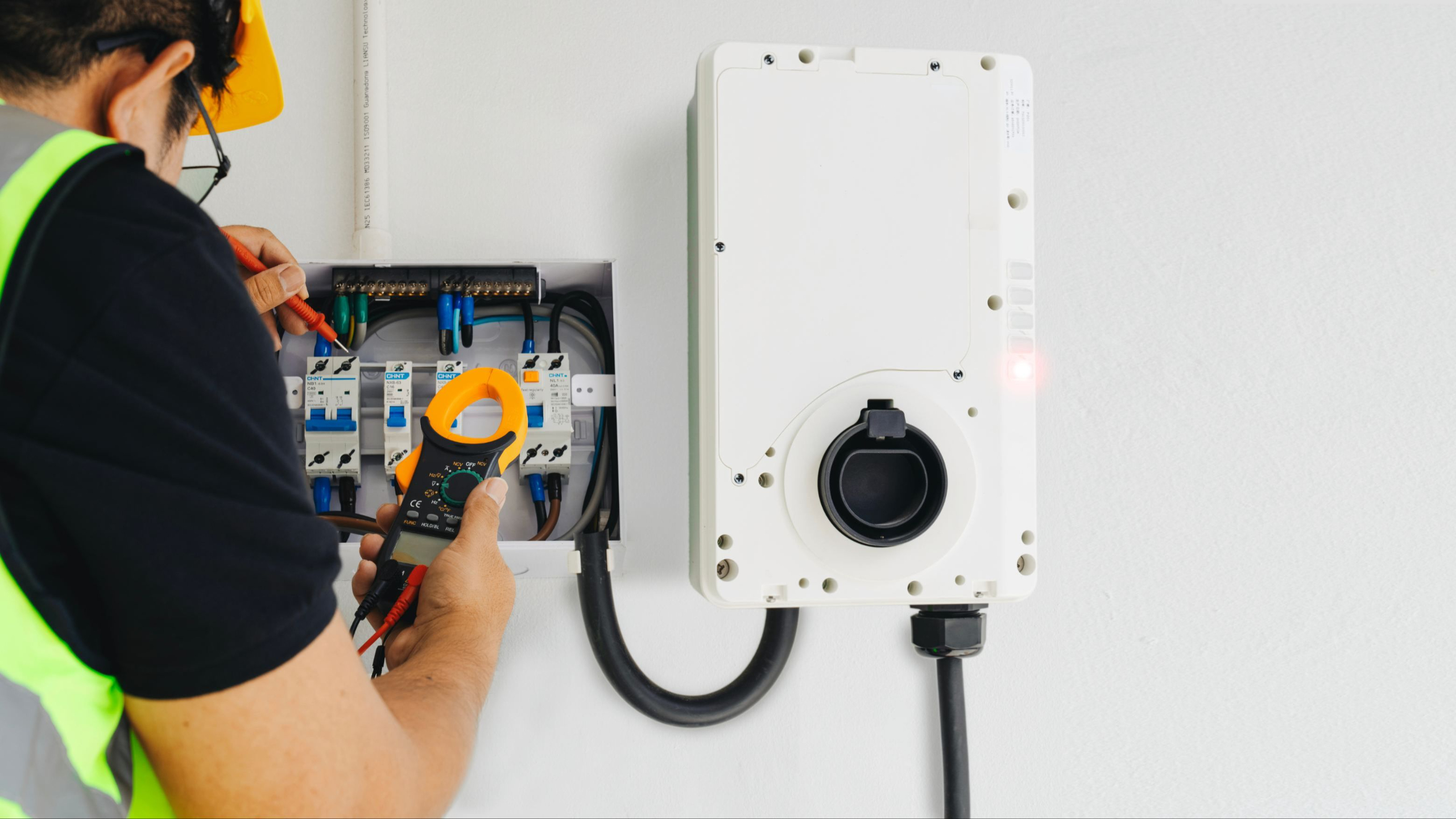
- A walkthrough of a residential Level 2 installation: site evaluation, load analysis, panel work, conduit, hardware, and commissioning
- What a commercial DC fast charger deployment involves, from utility coordination to trenching to network activation
- What fleet depot work looks like and why it is becoming one of the fastest-growing segments in the EV installation market
- The physical reality of the work: outdoor labor, trenching, climbing, inspections, and documentation
- What hiring managers and project supervisors look for when evaluating new installers in their first 90 days
Module 5
The Personality and Skills Fit Check
EV electrician work rewards a specific type of person: someone who is comfortable with electrical fundamentals, can work independently across different job sites, and does not mind a customer-facing component on residential installs. This module gives you an honest self-assessment before you invest in training or commit to an apprenticeship program.
What you'll learn:
- The 6 fit dimensions: electrical aptitude, physical comfort, procedural discipline, independence, problem-solving under pressure, and customer communication
- The lifestyle trade-offs: travel between job sites, variable scheduling, and outdoor work in all weather conditions
- The personality types that thrive in residential and small commercial work versus large infrastructure deployments
- What the first 90 days on a crew actually require of you and how experienced electricians evaluate new installers
- Your personal fit score heading into the final module and decision framework
Module 6
Your Decision, Your Training Path, and Who Pays for It
Turn your fit score into a clear YES or NO and a concrete next step. This module walks you through the training sequence that works in the real world, the funding sources that may cover much of the cost, and a 30-day action plan whether your answer is YES or NO. For workforce agencies and public-sector partners, this is the section that connects the course to employability and funding alignment.
What you'll learn:
- The training sequence that works: electrical foundation first, EVITP certification second
- The 4 training pathways ranked by cost, length, and hireability: apprenticeship, community college certificate, trade school program, and employer-sponsored on-the-job training
- The funding stack: apprenticeship pay from day one, Pell grants, WIOA workforce funds, GI Bill, and employer tuition assistance
- Red flags that expose low-quality programs that do not lead to real jobs in the EV installation market
- Your complete 30-day action plan: the exact steps to take in the next month whether your answer is YES or NO to this trade
COURSE DETAILS
- 6 modules
- Approximately 15 to 17 minutes each, totaling 90 minutes
- Delivery: Video taught by Kyle, your Technically Forward course guide
- Per-module structure: Video, downloadable read-along guide
- 6-question end-of-module quiz
- 20-question final exam and personalized Career Fit Report
- Price: $97